)
The Slow Food movement* promotes a number of objectives, among those of
special interest to us here in Italy being: |
Here are a few examples of Tuscan slow food or slow food sources to look for when you visit Tuscany and Umbria. |
|
|
|
|
|
|
||||||
|
|||||||
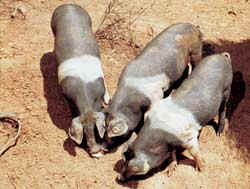
Cinta Senese Pig The only Tuscan native pig breed to avoid extinction, the Cinta Senese has a long snout and a black coat with a white band around the
chest - hence the name, cinta meaning 'sash' in Italian. Thanks to breeding in the natural or semi-natural state, the meat is evenly veined with fat, with an outstanding
flavour and aroma. A whole range of cured meats are made with the various parts of the animal: lardo, rigatino, gotino (or guanciale), prosciutto, salame, capocollo, and so on. |
|
||||||
|
|
|
||||||
|
||||
|
|
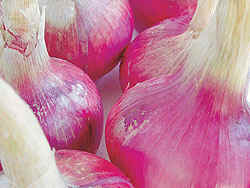
Certaldo OnionCited in Boccaccio's Decameron, the Certaldo Onion
is a symbol of its town of origin. Two varieties exist. The Statina is round in shape and purplish in color with succulent
flesh. It is best eaten in the summer months. The bright red and pungent Vernina is harvested from the end of August through the winter months. Both varieties are excellent for soups and for francesina, a dish of boiled beef and puréed onion. |
||
|
|
|||
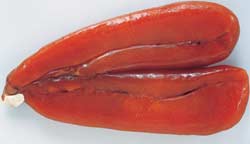
Orbetello BottargaIn Orbetello, the art of preserving fish was probably introduced by the Spanish, who were smoking eels and dressing fish with escabece, a vinegar sauce, as early as the 16th century. In Orbetello they still make anguilla scavecciata (eel in vinegar) and anguilla sfumata (smoked eel). Bottarga (from the Arabic botarikh, meaning salted fish roe) has
always been produced from the roe of the grey mullet. Tender and amber in
colour, it is excellent sliced thin with a splash of extra-virgin olive oil and a squeeze of lemon. |
|
||
|
|
|||
|
|
|||
|
|
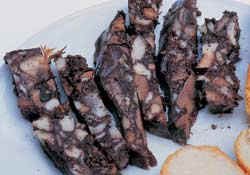
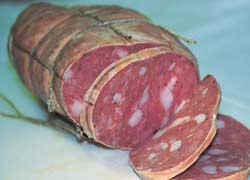
Prato MortadellaIn Tuscany, Mortadella was historically simply a means of using up leftover cured meats and poorer cuts of pork.
Flavoured with spices and liqueur and boiled in water, chunks of Mortadella were cured in Prato and parts of the province of Pistoia at the start of the
twentieth century. Prato Mortadella has a distinctive dull pinkish colour
due to the addition of a few drops of alkermes liqueur to the mixture, which exudes exotic spicy aromas. |
||
|
|
|||
Tuscan Sea PalamitaWrongly believed to be of lesser quality than tuna, the Tuscan Sea Palamita is a delicacy best enjoyed conserved in oil with bay leaves, pepper and chili.
Palmita is a member of the tuna and mackerel family fished throughout the Tuscan
islands. It is a long fish (sometimes up to 80
cm), with a wide mouth and sharp teeth and is electric blue in colour with black stripes. |
|
||
|
|
|||
|
|
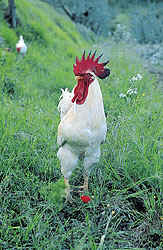
Valdarno ChickenThe Valdarno Chicken is tall and loose-limbed with sturdy thighs and a small breast. It has white feathers with a plumed, sickle-shaped tail, an erect blood-red crest, well-developed wattles, large
cream-coloured ears with red veins and yellow beak, feet and skin. The bird grows slowly and reaches optimal weight after 4-6 months. Both meat and eggs offer excellent
flavour. The eggs have ivory shells and, though smaller than the battery variety, have much larger,
yellower yolks. |
||
|
|
|||
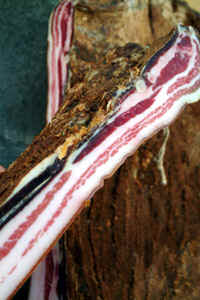
Valdarno TareseThe most salient feature of this
pancetta - known locally as Tarese - is its enormous size. An entire Tarese measures 50 by 80 centimeters. It is made with both the back and stomach of the pig and is seasoned with red garlic and a mix of pepper, orange peel and spices. After about ten days packed in salt, it is cleaned and weighted down to dry for a day. The process of salting and spicing is repeated, and then it is covered in pepper and left to age for two or three months. |
|
||
|
|
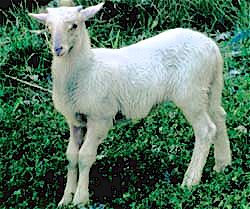
Zeri lambThis sturdy
medium- to large-sized sheep has a well-proportioned head and white fleece. Zeri sheep are pastured all year round, save for winter. The milk is high in nutrition (especially protein) but is used only to feed lambs. Because of this diet of mother's milk and pasture grass, the lamb's meat is exceptionally tender and wonderfully scented. The most traditional local preparation is agnello al testo (roast leg with potatoes). |
|
|
|
||
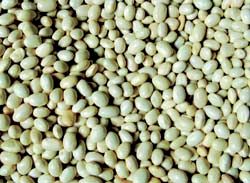
Zolfino BeanAlso known as 'one hundred beans' (because they are
sown on the 100th day of the year) or 'buttery beans', Zolfino Beans are small, round and yellow with a soft skin. These beans are cultivated between the Arno and Pratomagno, usually 230-300
m above sea level and sometimes up to 600 m. When cooked, they melt in the mouth like butter. They are eaten boiled, dressed with extra virgin olive oil and piled on toasted bread or served as a side dish with
bistecca alla
fiorentina. |
|
|
|
|
||
|
|
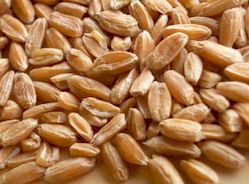
SpeltSpelt
(also known as farro) is a nutritious relative of common wheat that retains nearly all of its nutritional value in the
kernel so that, even after processing, it contains high levels of proteins and
vitamins. Spelt is the oldest known cereal and was already cultivated in
7000 BC. Garfagnana is probably the only area in Tuscany where the spelt
(Triticum dicoccum) has always been cultivated. It is now grown
organically in the area. |
|
|
|
||
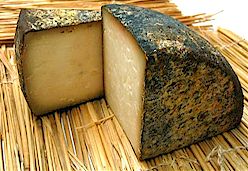
Pecorino
Pecorino
is a generic term for sheep's milk cheese. These strongly flavoured
cheeses come in a huge variety but can be divided into three age groups
- fresh, medium and aged (stagionata). They don't become better as they
are aged, merely more powerfully flavoured and harder. Which to eat is
purely a matter of personal taste. |
|
|
|
|
||
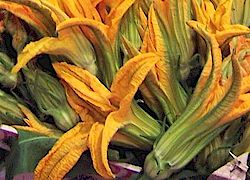 |
Pumpkin flowers, fiori di zucca in Italian, still thrown away in
some countries, are a delicious and delicate summer dish. Just rinse them, pat them dry,
coat them in a lightly salted egg-and-flour or pure egg batter, and fry them in abundant
oil. Wathc them carefully and as the batter browns, remove them from the
oli onto a piece of absorbent paper, lightly salt them and serve hot. |
|
|
|
||
|
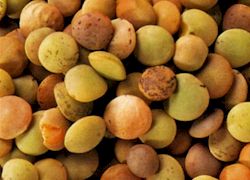
Norcia
lentils, and in particular the lentils of Castelluccio di Norcia,
are the most famous and probably also the best in Italy. Some of the characteristics make them unique
are their delicacy, a diameter of scarcely two mm. and their long
storage capability. Norcia lentils grow in the high plains of Castelluccio di Norcia at about 4,500 ft inside Monti
Sibillini National Park, located between the Marche and Umbria. The fields are subject to three-year rotation,
lentils being rotated with one year of wheat and one of pasture. Norcia
lentils are often striped and vary in colour from speckled green through
faded yellow to light brown. The lentils are sown in Spring and then
harvested in July and August. The climate and soil of Umbria contribute to their thin skin and soft consistency, allowing them to be cooked without having
to be soaked first. |
|
|
|
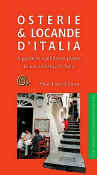
We strongly recommend the following guide to
Osterie & Locande d'Italia: |
* This website does not in any way represent the
Slow Food Movement
of Italy nor any
of it official organs.
Our Tuscan slow food website is an independent site that refers to "slow
food" and
the "slow food movement" for editorial and informational
purposes only.
Tuscan Slow Food © ammonet InfoTech 2005 - 2021. All rights reserved.

)

)